
Prix fixe bundles a multi-course meal into one set price; à la carte prices every dish on its own, letting you build the meal item by item. Neither format wins on cost by default. What you order, how many courses you eat, and whether you add wine or supplements decide the final bill more than the menu style itself. Pick prix fixe for a curated, predictable night out; pick à la carte when you want full control over what lands on the table.
TL;DR:
Price differences depend on how many courses you plan to order and whether you add extras like wine or supplements.
Prix fixe menus are ideal for a curated, predictable experience, while à la carte offers control over individual dish choices and spending.
A full, multi-course meal often costs about the same or less with prix fixe, but à la carte may be cheaper for light eaters or small groups sharing plates.
Dietary restrictions are easier to accommodate with à la carte unless you notify the restaurant in advance for prix fixe menus.
Many restaurants use hybrid menu formats, combining prix fixe and à la carte to suit different times or occasions.
Table of Contents
-
Prix fixe vs à la carte: how each menu format actually works
-
Which format actually costs you less: pricing and bill scenarios
-
À la carte advantages and prix fixe menu benefits for diners
-
Behind the pass: how each format shapes a restaurant’s kitchen
-
Choosing menu types for your occasion: a quick Brévant checklist
Prix fixe vs à la carte: how each menu format actually works
À la carte comes from the French phrase for “according to the menu,” meaning every dish carries its own price and you compose the meal course by course. You can order one plate and a coffee, or six courses and a bottle of Barolo. Nobody is steering you either way.
Prix fixe, literally “fixed price,” bundles a set number of courses under one total. That doesn’t mean the kitchen picks everything for you. Most modern prix fixe menus build in choice within each course, so you’re usually selecting between two or three starters, mains, and desserts rather than eating whatever the chef feels like sending out.
A few related terms show up on menus and it helps to know the difference:
-
Table d’hôte is a close cousin of prix fixe, rooted in the older tradition of a host serving a fixed meal to guests at a communal table. Restaurants today often use it interchangeably with prix fixe.
-
Tasting menus sit on the same spectrum but skew toward more courses and heavier chef control, distinct from a standard prix fixe in scale and intent.
-
Set lunch, holiday menus, and restaurant week are all prix fixe in practice, built to cap a diner’s risk and simplify service during busy stretches.
If a menu says “3 courses, $65” with two options per course, that’s prix fixe with built-in flexibility, not a locked script.
Which format actually costs you less: pricing and bill scenarios
The pricing math comes down to bundling versus itemizing. Prix fixe charges one number for the whole sequence. À la carte totals up as you go, so your final bill depends entirely on what you add to the table.
Here’s how the same three diners might fare under each format:
-
The light eater who wants a starter and a glass of wine will almost always spend less à la carte. Paying a flat $70 for three courses you don’t fully want is a losing trade.
-
The full-course diner who was going to order a starter, main, and dessert anyway often comes out roughly even, or slightly ahead, on prix fixe, since the bundled price is usually set a notch below what those three items would total individually.
-
The group sharing plates does best à la carte, since splitting starters and mains across four people lets everyone eat less per person than a fixed multi-course format assumes.
Wine, coffee, and supplements change the math in both directions. A prix fixe menu with a wine pairing added on can end up costing more than an à la carte main and a glass ordered separately, depending on the pour sizes and the pairing tier. Cover charges or minimums, where they exist, apply regardless of format and should factor into your decision either way.
Hospitality analysts are consistent on one point: neither menu style is inherently cheaper. The format sets the structure. Your choices inside that structure set the price.
À la carte advantages and prix fixe menu benefits for diners
Your priorities for the evening (speed, budget, control, or a curated experience) should drive the pick, not habit.
À la carte gives you full command over spend and dish selection. If you’re not hungry, order light. If the table has wildly different budgets or appetites, à la carte lets everyone order to their own comfort level instead of committing to the same fixed sequence.
Prix fixe earns its place for celebrations and set-seat events. You get a curated sequence someone else designed to flow well, a total you know before the first course arrives, and a pace built for a longer, more relaxed meal.
Dietary restrictions work under either format, but the approach differs:
-
À la carte lets you simply avoid dishes that don’t work for you, no advance notice required in most cases.
-
Prix fixe usually needs a heads up when you book, since courses are set and substitutions have to be arranged with the kitchen ahead of time.
Pro Tip: Call or note dietary restrictions when you reserve, not when you sit down. A kitchen running a fixed menu for forty covers has far less room to improvise a substitution on the fly than one plating individual à la carte orders.
Behind the pass: how each format shapes a restaurant’s kitchen
Menu format isn’t just a diner-facing choice. It changes how a kitchen buys, preps, and plates every single night.
Prix fixe gives kitchens predictable covers and a shorter, tighter list of dishes to execute. Fixed-price formats standardise how long a table occupies its seat and how purchasing gets planned, which is part of why restaurant weeks and holiday menus lean so heavily on this structure. Front-of-house and the kitchen can sync their rhythm around a known sequence, which tends to make multi-course service faster and more consistent from table to table.
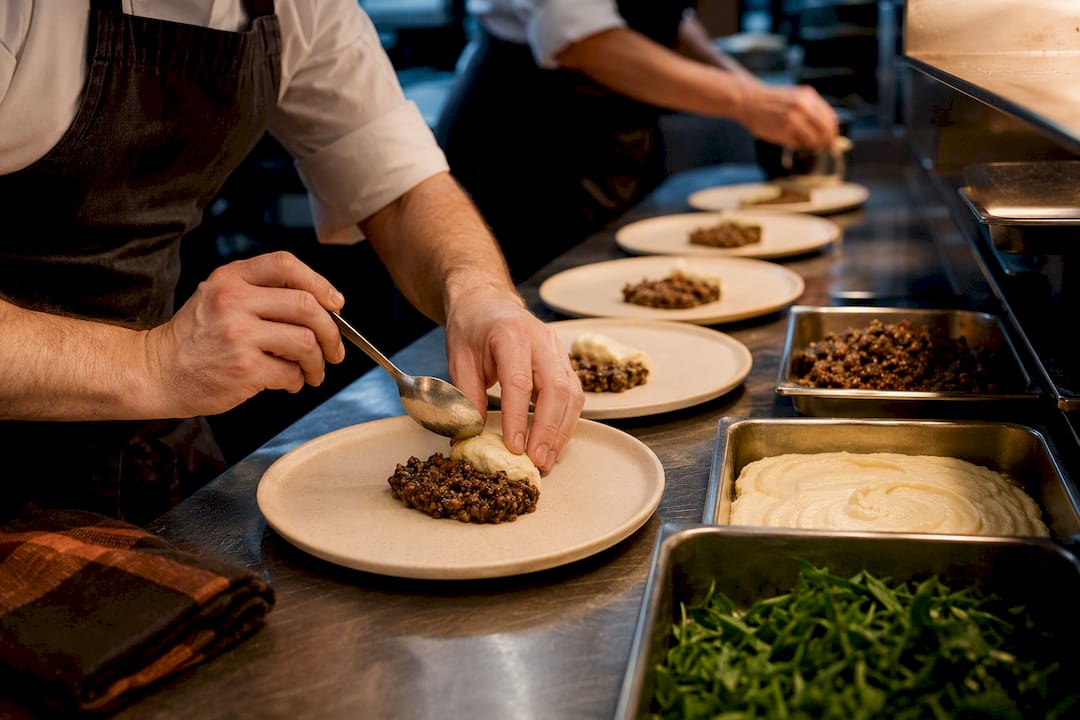
À la carte carries more built-in complexity. The kitchen has to stock ingredients for a much wider range of dishes and make real-time calls as tickets come in unevenly, since nobody knows in advance whether table six wants three appetizers or a single steak.
Most working restaurants don’t pick one format and live with it forever. Hybrid setups are common:
-
A set lunch menu at midday, switching to full à la carte for dinner service.
-
A holiday or restaurant-week prix fixe layered on top of a regular à la carte card, often promoted as the headline offer while a smaller à la carte selection stays available on request.
-
Tasting menus offered as an upgrade path alongside a standard à la carte dinner service.
The format on the menu you’re handed tells you a lot about how that kitchen is built to run that night, not just what you’ll pay.
Choosing menu types for your occasion: a quick Brévant checklist
Match the menu to the meal you actually want, not the one that sounds most impressive on paper.
Before you book, run through a short checklist:
-
What matters most tonight? Value and control point to à la carte; a curated, worry-free experience points to prix fixe.
-
How much time do you have? A tight lunch break favours à la carte or a fast set-lunch prix fixe; a full evening leaves room for a longer fixed sequence.
-
What’s your budget target? If you want a known number before you sit down, prix fixe removes the guesswork. If you want to control spend dish by dish, à la carte does that better.
-
Any dietary restrictions in the group? Flag them at booking either way, but especially for prix fixe, where the kitchen needs lead time to adjust a set sequence.
-
How formal does this need to be? A business lunch usually calls for something quick and itemized; an anniversary dinner or group celebration often suits a fixed, paced menu better.
When you call or book online, ask directly: is the menu fully fixed or does it include choices per course? Are substitutions possible for allergies or preferences? Do pairings come included or as an add-on? A good restaurant will answer all three without hesitation, and a solid confirmation should spell out the format so there are no surprises when the bill arrives.
Brévant’s editorial note on menu formats
We factor menu format into every recommendation because it changes the experience as much as the food itself. A restaurant that runs a tight, well-designed prix fixe on a Tuesday tells you something different about its kitchen than one leaning entirely on à la carte flexibility. Neither approach is better. The right pick depends on whether you want a curated night handed to you or a menu you build yourself, course by course.
— Brévant
Find restaurants that make their menu format clear
Brévant Guide keeps the search deliberately narrow. Each city features only three restaurants, selected for the strength of their cooking, identity and overall dining experience. Whether you’re looking for a prix fixe experience or an à la carte restaurant, the city guides offer a concise place to start.
Our city guides highlight restaurants worth booking, whether you’re after a set-price tasting experience or a card full of individually priced dishes to build your own meal. Start with the Toronto dining guide or the Montréal restaurant picks, or browse the full guide to discover three carefully selected restaurants in each city.
FAQ
What is a prix fixe menu?
A prix fixe menu bundles a set number of courses, usually with a choice of dishes within each course, under one fixed total price rather than pricing every item separately.
What does à la carte mean on a menu?
À la carte means every dish is priced and ordered individually, so you build your own meal course by course instead of following a set sequence.
Is prix fixe or à la carte cheaper?
Neither format is inherently cheaper. A light eater usually spends less à la carte, while someone planning a full three or four course meal often comes out about the same or slightly ahead on prix fixe.
Is table d’hôte the same as prix fixe?
Table d’hôte and prix fixe are closely related and often used interchangeably, both describing a fixed-price meal, though table d’hôte has roots in the older tradition of a host serving guests at a shared table.
Can restaurants offer both formats at once?
Yes. Many restaurants run hybrid setups, such as a fixed set lunch alongside a full à la carte dinner menu, or a holiday prix fixe promoted next to a smaller à la carte card.